
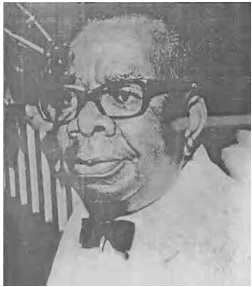
Ekpo Nta Amaku (1898–1974) stands as one of the most influential pioneers of modern Efik literature, a figure whose life and work bridged the worlds of oral tradition, formal education, and written cultural preservation. He was born on February 24, 1898, in Okpo Town along the Upper Cross River, to Chief Daniel Obiom Amaku and Madam Ekanem Ikpana. From an early age, he was immersed in an environment that valued language and expression—his father being a noted writer whose personal diary remains one of the earliest examples of non-biblical written Efik.
Amaku’s early curiosity set him apart. As a child, he was deeply inquisitive, constantly asking questions and immersing himself in the sounds and rhythms of his culture. He spent time among village storytellers, dancers, and singers, absorbing the cadence of Efik oral tradition, an influence that would later define his literary voice. His formal education at Duke Town School and the Hope Waddell Training Institution in Calabar further shaped his intellectual path, leading to the award of his Teacher’s Second Class Certificate in 1919 and later a Grade I Certificate in 1932.
His professional life was devoted largely to education. He served as a teacher under the Church of Scotland Mission (now the Presbyterian Church of Nigeria), working across Calabar and the Cross River region, including Abijan and Itigidi. From 1946 to 1956, he served as Headmaster of Duke Town Secondary School, and even after his retirement in 1957, he continued to teach for an additional two years at the Hope Waddell Institute. Through education, he not only shaped minds but also reinforced the importance of language as a vessel of identity.
Amaku’s literary career began in 1927 and grew into an extraordinary body of work spanning prose, poetry, drama, short stories, and educational texts. Among his earliest publications were Ufökuto Ikö Efik (1933), a collection of poetic narratives, and Kini Kini, both printed in Calabar. His widely celebrated Edikot Nwed Mbuk series became foundational in Efik language education, used across nursery, primary, and secondary schools. His writings drew inspiration from both everyday life and deeper philosophical reflection—transforming ordinary subjects into meaningful cultural expressions.
Beyond creative writing, Amaku made extensive contributions to preserving Efik heritage. He collected and documented proverbs, ballads, praise songs, love lyrics, and funeral dirges, and translated hymns that are still present in Efik hymnals today. His prolific output—reportedly spanning over fifty works—earned him the nickname “the man with inky fingers” among his contemporaries, a testament to his relentless dedication to writing.
His influence extended into institutional literary development. Following the revival of the Efik Translation Bureau in 1945, Amaku contributed numerous pamphlets, helping to standardize and expand written Efik literature. For many years, he stood as a central figure in the literary space, sustaining the growth of Efik writing until the emergence of other dramatists in the mid-20th century.
Amaku’s work also gained international recognition. In 1938, his prose work Abasi Ekpenyong won first prize at a major literary competition organized by the International African Institute, affirming the global relevance of indigenous African-language literature. Decades later, in 1970, he earned another first prize in an Oxford University literary contest for his drama Inyang Abasi Ndem, further establishing his role in bringing Efik literature into global academic and literary conversations. In recognition of his lifelong contributions, he was later awarded an honorary Doctor of Letters degree by the University of Ibadan in 1972.
Beyond his literary and academic achievements, Amaku was a deeply spiritual and community-oriented individual. He was actively involved in church life at Duke Town, where he served as an Elder and Clerk of Session. Known for his sociability and warmth, he was also a member of the African Club and a Mason in the Lodge Hope No. 1156 of the Scottish Constitution. Despite personal loss—including the passing of his wife in 1968—he remained devoted to his work and faith.
He passed away peacefully on January 25, 1974, at the age of seventy-six, leaving behind a remarkable legacy—not only in his writings but in the generations of readers, students, and scholars shaped by his work.
Through his life and contributions, Ekpo Nta Amaku did more than write, he preserved a language, documented a culture, and ensured that the voice of the Efik people would continue to be heard, studied, and celebrated for generations to come.
Inyang Abasi Ndem — Where Justice Cannot Be Escaped
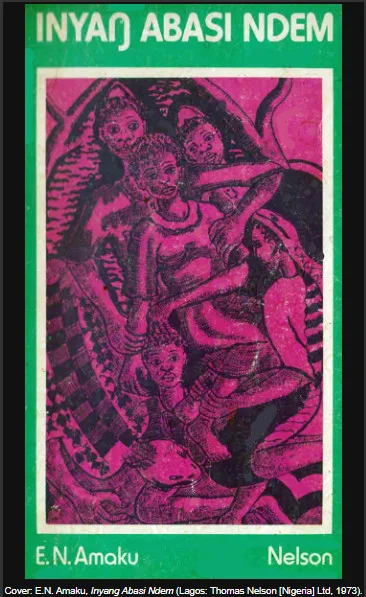
At the center of Amaku’s legacy is Inyang Abasi Ndem, a powerful, dramatic work that explores morality, consequence, and divine justice.
Inyang Abasi Ndem tells the story of Abasi Ekpenyong, a man whose life is marked by loss, survival, and eventual restoration. After a devastating sea incident separates him from his homeland of Abana, he is presumed lost. Rescued and given a new life in a distant community by a man named Ediañg, he rebuilds his identity, forms a new family, and rises to wealth, yet remains unknowingly tied to his past.
As the story unfolds, characters such as Ekenwe and Eburutu become entangled in a web of hidden identities, emotional conflicts, and unintended relationships. What begins as personal survival gradually evolves into a larger story of truth, revelation, and reconciliation. In the end, Abasi Ekpenyong returns to his homeland, where justice is restored, relationships are healed, and he is welcomed back with honour—fulfilling the deeper meaning of divine order under Inyang Abasi Ndem.
Amaku’s work reflects a worldview where actions are never without consequence.
In Inyang Abasi Ndem, justice is not only delivered through human systems, but through a higher spiritual authority. This reflects a core Efik belief—that the visible and invisible worlds are deeply connected.
The story teaches that truth cannot remain hidden forever, actions carry weight beyond the individual, and restoration is possible, but not without accountability
These ideas are not abstract—they are lived realities within the cultural framework the story represents.
Readers seeking to explore Inyang Abasi Ndem can find references and catalog listings through WorldCat, which provides information on libraries that hold the text. The work is also associated with Nigerian publishers such as Excel Publishers and may be available through university libraries with African literature collections. Additional cultural and archival context can be found via the Cross River Heritage African Diaspora resource, which highlights Efik literary works and their significance.
Ekpo Nta Amaku did not just write to entertain; he wrote to guide.
His work continues to serve as a teaching tool in cultural studies and language education, helping readers understand not just the Efik language but Efik philosophy.
Even today, his stories ask difficult questions: What happens when truth is hidden? What does justice really mean? Can a person ever outrun their past?