
The Men Who Negotiated with Empires
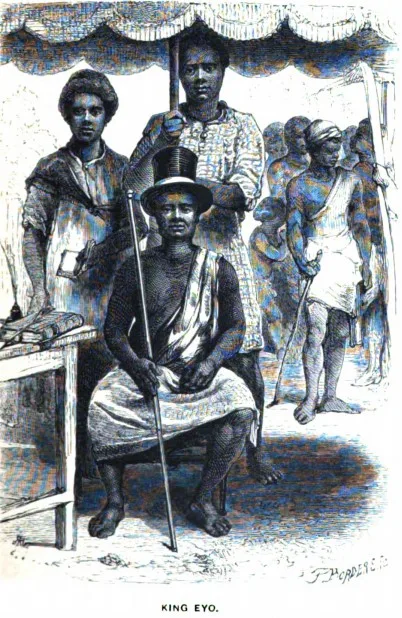
History often focuses on battles and conquests, but the rulers of Old Calabar understood that influence could be built through conversation as effectively as through force.
Long before formal colonial rule, Efik leaders had established themselves as skilled negotiators. Their position along the Calabar River gave them access to important trade routes connecting inland communities to international markets. This strategic location made them valuable partners to foreign merchants seeking access to the region.
The Calabar Kings understood that diplomacy was not simply about maintaining peace. It was about protecting interests, creating opportunities, and strengthening their position in an increasingly connected world.
As trade expanded, they cultivated relationships with British merchants, missionaries, and government representatives. Agreements were negotiated, disputes were settled, and commercial partnerships were established through dialogue.
This was not the behaviour of leaders being swept aside by history. It was the behaviour of leaders actively shaping it. Their ability to engage foreign powers on diplomatic terms would become one of the defining characteristics of Old Calabar's political culture.
Opportunity Arrives By Sea
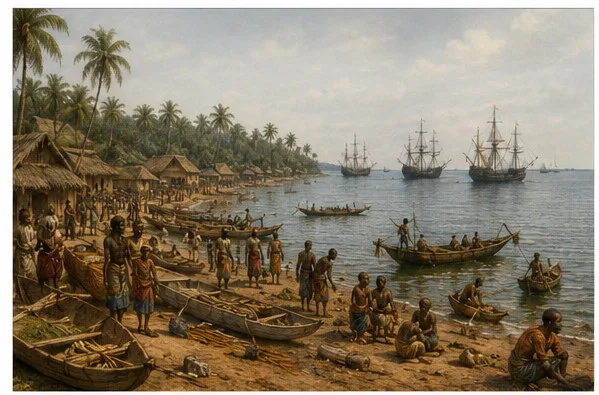
One of the most fascinating aspects of the relationship between Old Calabar and Britain is that many Efik rulers initially viewed British influence as an opportunity rather than a danger.
Britain represented access to education, technology, commerce, and international connections. To ambitious leaders seeking to strengthen their communities, these opportunities were difficult to ignore.
Rulers such as King Eyamba V and King Eyo Honesty II engaged directly with British authorities. They exchanged correspondence, discussed trade matters, and explored ways to deepen relations between their societies. The goal was not submission. The goal was advancement.
These leaders recognised that the world around them was changing rapidly. International trade networks were expanding, and European powers were becoming increasingly influential. Rather than isolate themselves, they sought ways to position Old Calabar advantageously within this emerging global system. From their perspective, diplomacy offered a path toward prosperity. At the time, that calculation likely seemed reasonable.
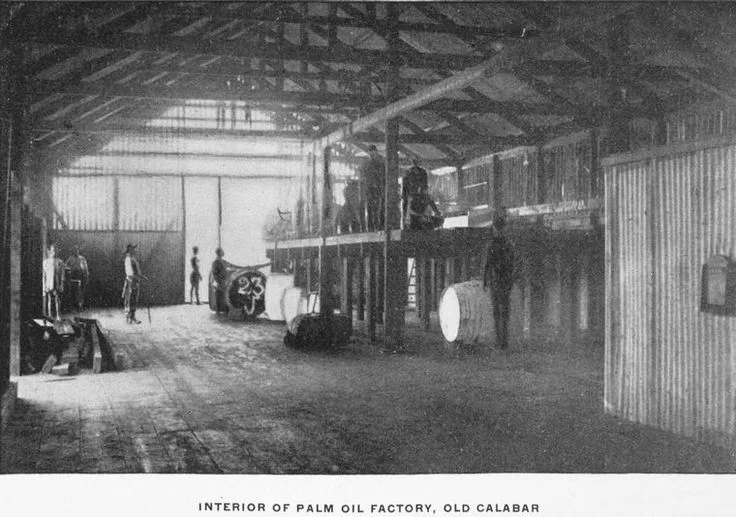
As Britain moved to abolish the slave trade, the rulers of Old Calabar faced a changing world. Leaders such as King Eyamba V pursued closer ties with Britain; he even proposed a symbolic union with Queen Victoria. At the same time, the kingdom gradually shifted from trading enslaved people to exporting palm oil, demonstrating a willingness to adapt as new opportunities emerged.
Letters to the Queen
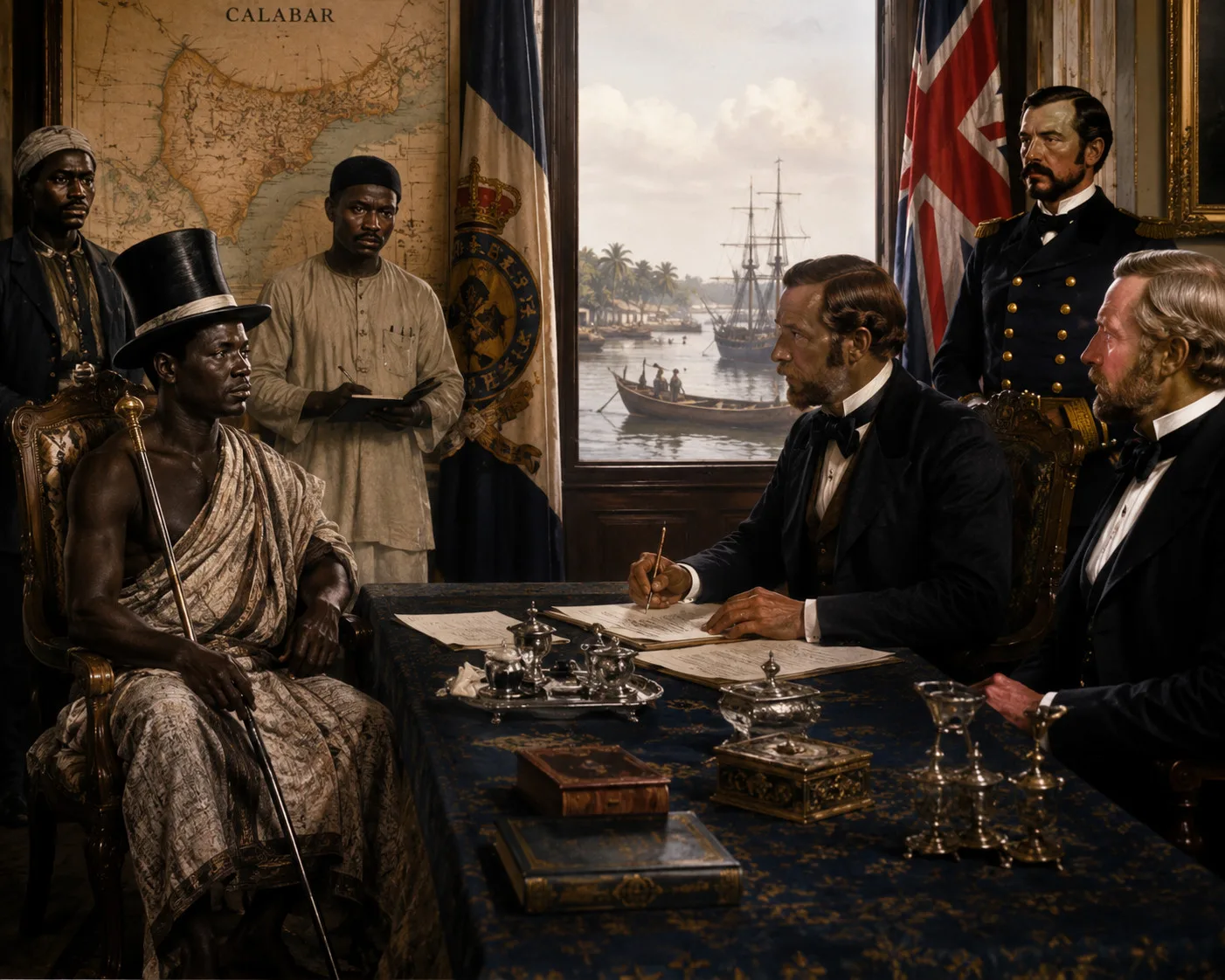
As trust developed between British officials and Efik leaders, the relationship became increasingly personal.
Letters were exchanged between rulers in Old Calabar and representatives of the British Crown. Discussions extended beyond trade to include education, religion, governance, and long-term cooperation. One of the most remarkable examples of this relationship was the proposal by an Obong of Calabar for a symbolic union with Queen Victoria. The depth of this relationship is reflected in a story still remembered in Calabar today. After King Eyamba V sent a letter proposing a symbolic union with Queen Victoria, he reportedly received gifts including a royal cape, a staff, and a Bible. Interpreting these as a sign of acceptance, the monarchy preserved a place of honour for the British Crown, a tradition reflected in the vacant throne still reserved for the English monarch during coronation ceremonies.
To modern readers, this may seem unusual. Yet it reveals something important about how Efik rulers viewed themselves and their place in the world. They did not see themselves as subjects appealing to a superior authority. They saw themselves as rulers engaging another ruler. This distinction matters.
Too often, African leaders of the nineteenth century are portrayed as passive recipients of European influence. The reality was far more complex. The Calabar Kings approached diplomacy with confidence, sophistication, and a clear understanding of political symbolism. They sought partnership where they believed partnership could be beneficial.
Whether those expectations would ultimately be fulfilled is another matter entirely.
The changes brought about by contact with Britain extended beyond politics and commerce. As new ideas spread through missionary activity and local reform efforts, some long-held customs were gradually reconsidered. Among the most notable was the practice of killing twins, which declined over time as attitudes shifted and communities embraced new perspectives. Like many aspects of Calabar's history, the change was not the work of a single individual but the result of ongoing dialogue between tradition, faith, and social reform.
The Price Beneath Prosperity
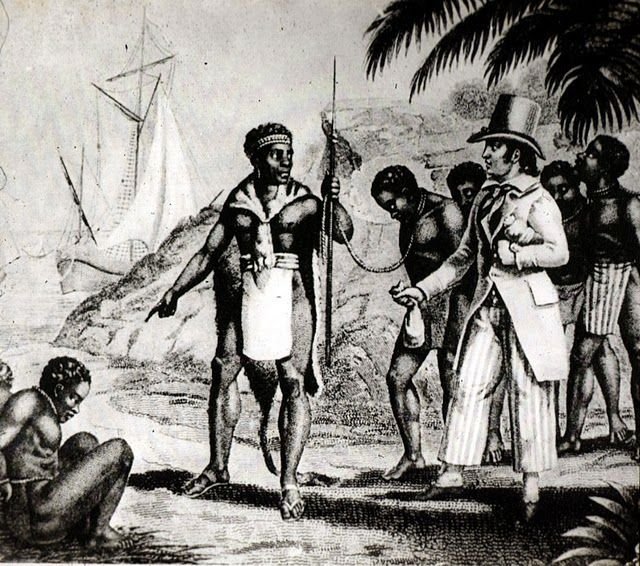
This is where the story becomes difficult. The wealth and influence enjoyed by many of the Calabar Kings, including prominent Efik leaders such as King Eyamba and King Eyo Honesty II, were closely tied to the transatlantic slave trade. From the ports of Old Calabar, enslaved men, women, and children were transported across the Atlantic to plantations in Jamaica, Barbados, and other British Caribbean colonies, where their forced labour helped fuel the wealth of the British Empire., where their labour fuelled colonial economies. For generations, the kingdom prospered as one of West Africa's most important trading centres.
Yet the same trade that brought prestige also drew Old Calabar into growing tensions with Britain as the campaign to abolish slavery gathered momentum. British pressure to end the trade challenged an economic system on which many coastal kingdoms depended, creating political uncertainty and testing long-standing alliances between Efik rulers and their European trading partners.
The rulers of Old Calabar did not create the transatlantic slave trade, nor were they its only participants. It was a vast global enterprise involving African rulers, European merchants, plantation owners, and imperial governments. Even so, the Calabar Kings were active participants in that system, and their decisions remain among the most debated aspects of their legacy.
This uncomfortable truth forces us to confront difficult questions. How should history judge leaders who navigated opportunities within a system they did not create, yet from which they undeniably benefited? Can diplomatic success be separated from its human cost? History offers no simple answers—only the reminder that the past is often far more complex than the labels of hero or villain.