

Chief Esien Ekpenyong Ñkaña (1898–1971) was a pioneering Efik writer, teacher, poet, and storyteller born into the Ambo house of Creek Town in present-day Odukpani Local Government Area of Cross River State, Nigeria. Widely regarded as one of the earliest architects of written Efik literature, he played a crucial role in preserving indigenous language and cultural knowledge during the early 20th century.
At a time when colonial systems emphasized European languages, Nkana chose to write in Efik, capturing the rhythm, philosophy, and worldview of his people. His commitment to cultural preservation through storytelling earned him early recognition; in 1933, he won first prize in one of the earliest indigenous literary competitions in Nigeria, an initiative associated with institutions such as the International African Institute. Beyond his most celebrated work, Mutanda Oyom Namondo, Nkana’s broader legacy lies in his dedication to ensuring that the Efik language and identity were not only spoken, but documented and sustained for future generations.
Mutanda Oyom Namondo: A Story That Lives Beyond Time
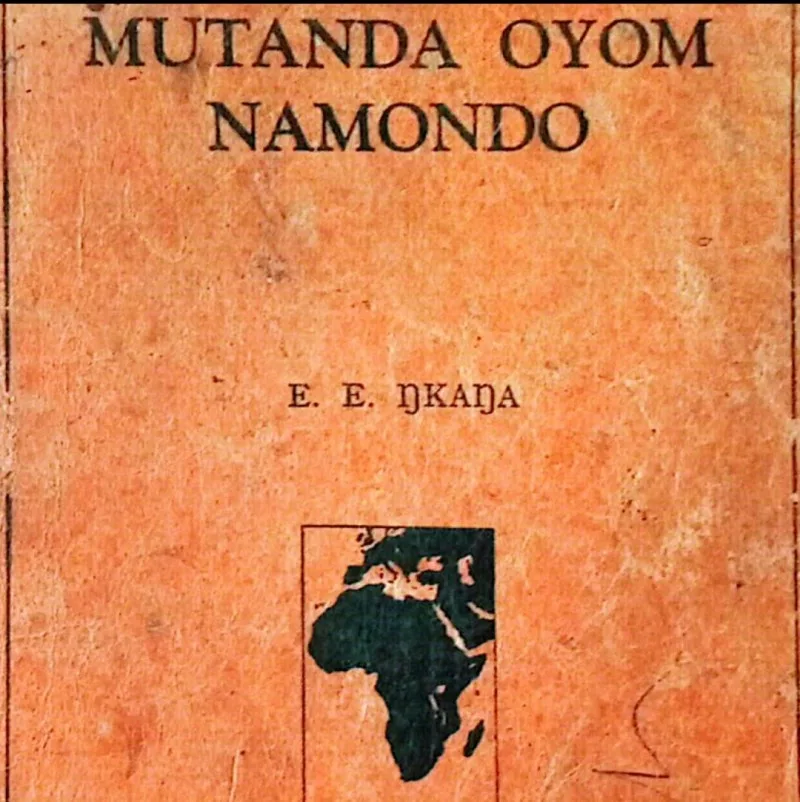
Nkana’s most celebrated work, Mutanda Oyom Namondo, remains one of the most enduring pieces of Efik literature. The story revolves around King Mutanda’s emotional and suspense-filled quest to find his missing son, Namondo, who allegedly drowned while swimming in the village river. As the narrative unfolds, readers are taken on a journey through the heart of Akwa-Cross culture, rich in symbolism, emotion, and traditional artistry.
What makes Mutanda Oyom Namondo remarkable is not just its plot, but what it represents.
Through the king’s journey, Nkana explores themes that still resonate today: leadership, grief, responsibility, and the deep connection between individuals and their community. In Efik culture, a leader is not separate from the people; their pain is shared, their loss is collective.
The story reminds us that identity is not individual; it is communal.
Nkana’s writing style reflects the oral traditions from which the story emerges. Proverbs, symbolism, and narrative rhythm give the text a voice that feels both intimate and timeless. It reads not just as a book, but as a story being told, one that invites the reader to listen closely.
Readers interested in exploring Mutanda Oyom Namondo can access the work through several platforms. It is available for purchase on Amazon, while additional bibliographic details and previews can be found on Google Books. For digital readers, the text is accessible via Scribd, and it is also available locally on Selar. Those seeking library copies can locate them through WorldCat.
Nkana did more than write a story; he preserved a way of thinking.
His work continues to be studied in schools, referenced in academic discussions, and passed down through generations. It stands as a reminder that language is more than communication; it is memory, identity, and belonging.
Today, as many indigenous languages face the risk of fading, Nkana’s contribution feels even more urgent. He showed that writing is not just an act of creativity, but an act of preservation.