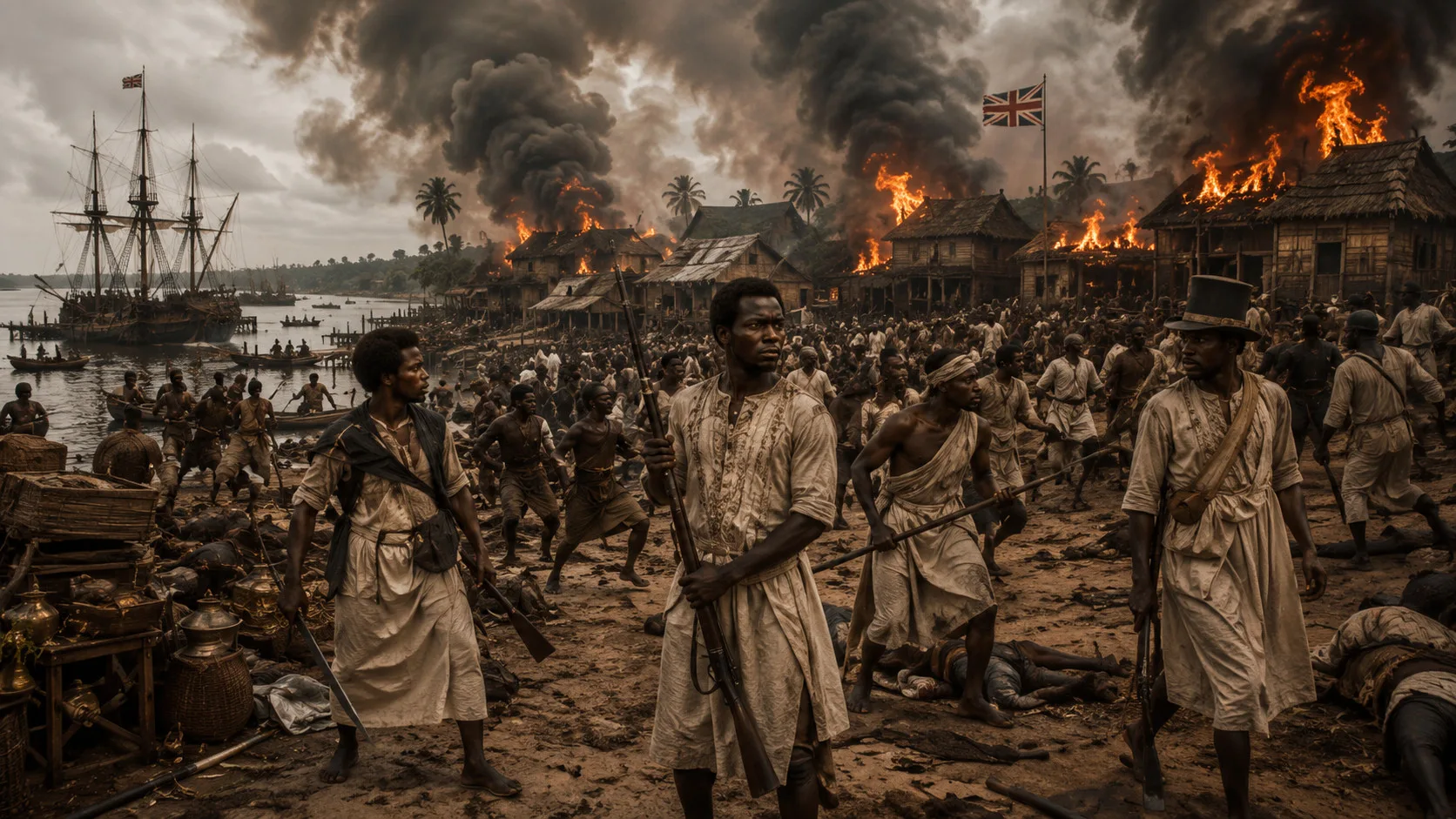
The 1767 Calabar Massacre: When Trade Turned Violent

The river was busy long before sunrise.

Canoes glided across the calm waters of the Calabar River, carrying traders, interpreters, and messengers between bustling riverfront settlements. European merchant ships rested at anchor, their sails lowered as captains waited for another day of negotiations. Along the shoreline, merchants inspected imported textiles, polished brassware, muskets, and barrels of rum destined for exchange.

To an outsider, Old Calabar appeared to be thriving. Commerce flourished. Alliances were celebrated. Fortunes were built. The river had become one of the busiest trading corridors on the West African coast, connecting inland communities to the Atlantic world. But beneath the prosperity, something was changing. Every successful trade meant more wealth. Every profitable voyage meant greater influence. And every new alliance created another rival.

By 1767, the relationships that had transformed Old Calabar into a commercial powerhouse had become dangerously fragile. Trust was giving way to suspicion. Competition was becoming personal. Then, in a single devastating episode, the illusion collapsed. The 1767 Calabar Massacre was not simply an outbreak of violence. It was the breaking point of a trading system built on ambition, rivalry, and shifting loyalties, a tragedy that reshaped Old Calabar's political landscape and exposed the human cost of unchecked competition.

The River That Built an Empire
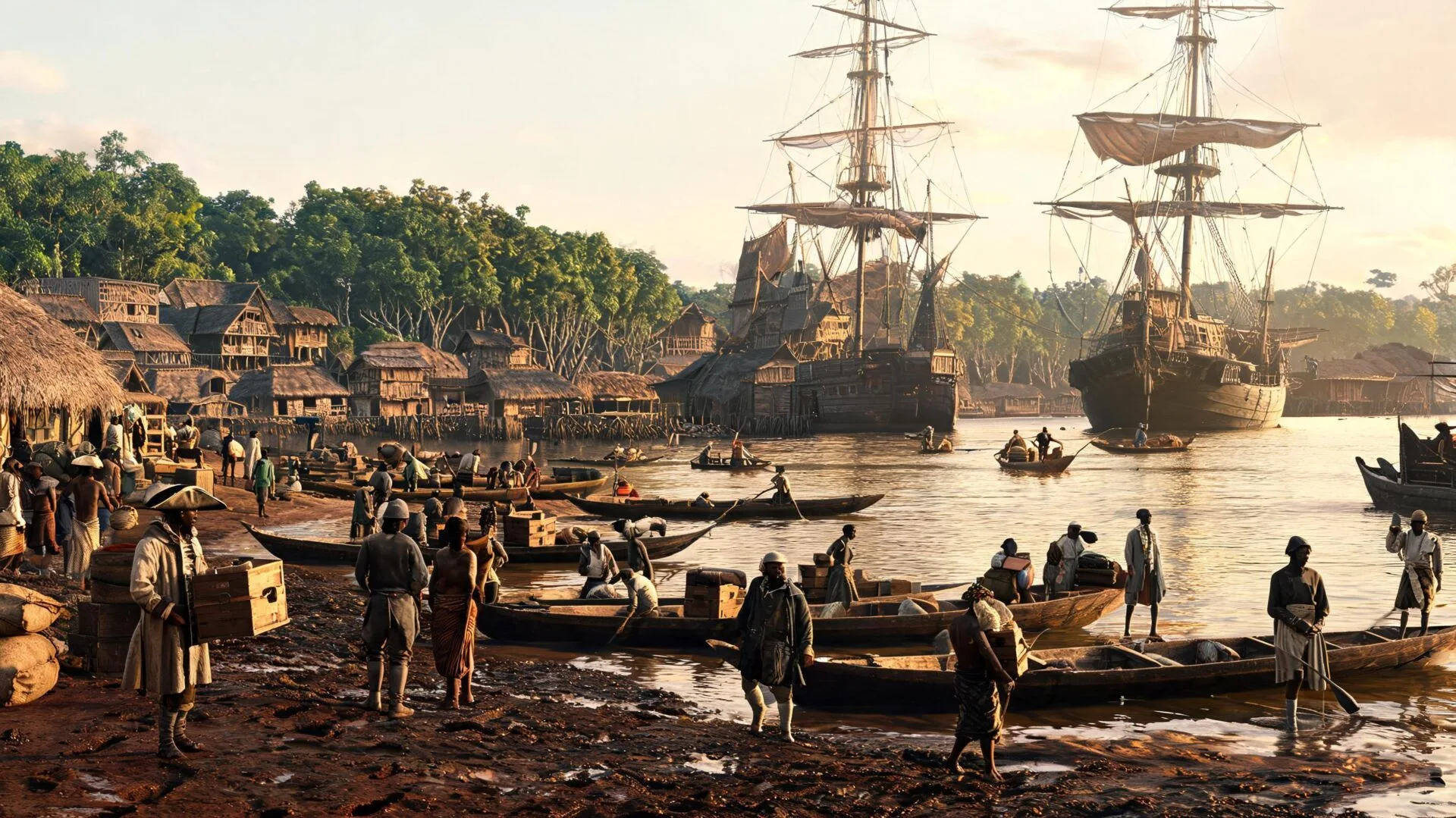
Calabar River

Long before colonial rule reached the region, the Calabar River was one of West Africa's greatest commercial highways. Its waterways connected inland producers with European merchants who crossed the Atlantic in search of enslaved people, ivory, palm products, and other valuable commodities. Yet European traders could not simply sail into Old Calabar and conduct business.

Trade depended on the cooperation of influential Efik merchant houses. Families in Old Town and Duke Town controlled access to the river, negotiated prices, maintained relationships with inland suppliers, and decided which European captains could trade successfully.

This gave the Efik remarkable leverage. Contrary to the popular belief that Europeans controlled every aspect of Atlantic commerce, Old Calabar's merchants often dictated the terms of business. British captains frequently waited weeks for negotiations to conclude, understanding that profitable trade depended upon maintaining good relationships with local leaders.

Hospitality, therefore, was never passive. Welcoming foreign merchants was a carefully managed strategy that protected commercial interests while strengthening Old Calabar's position as one of the Atlantic world's most influential trading centres. For decades, the system worked until competition became stronger than cooperation.

When Trust Became the Most Valuable Commodity

As trade expanded, so did the fortunes of Old Calabar's leading merchant families.

Influential houses competed for European customers, negotiated exclusive trading relationships, and sought greater control over commerce along the river.

Among the most powerful figures were Grandy King George and the Robin Johns of Old Town, alongside Duke Ephraim and other influential leaders in Duke Town. Their rivalry was about far more than personal prestige. It was about controlling one of the most profitable trading networks in West Africa. European captains unintentionally intensified these rivalries.

Rather than remaining neutral, some merchants formed close alliances with particular Efik families, offering favourable prices, exclusive contracts, or political support. These relationships shifted the balance of power and deepened existing tensions between competing trading houses. Business was no longer simply about exchanging goods. It had become a contest for influence. And when influence became threatened, trust began to disappear.

The Day Everything Changed

The War

In 1767, the fragile balance finally broke. What began as another commercial negotiation soon descended into one of the bloodiest conflicts in Old Calabar's history. Disputes over trade agreements, political influence, and European alliances erupted into open violence. Merchant rivalries that had simmered for years exploded across the riverfront settlements. Warriors poured into the conflict. Homes were attacked. Trading compounds were destroyed. Families fled for safety.

British traders, once content to negotiate from the sidelines, found themselves drawn into local disputes that they neither fully understood nor could easily control. By the time the fighting ended, more than 400 people were believed to have been killed. The massacre shocked both African and European observers.

For a trading city whose prosperity depended upon stability and cooperation, the violence revealed just how fragile that prosperity had become. The Calabar River, once a symbol of commerce and opportunity, had become the stage for one of its darkest chapters.

More Than European Aggression
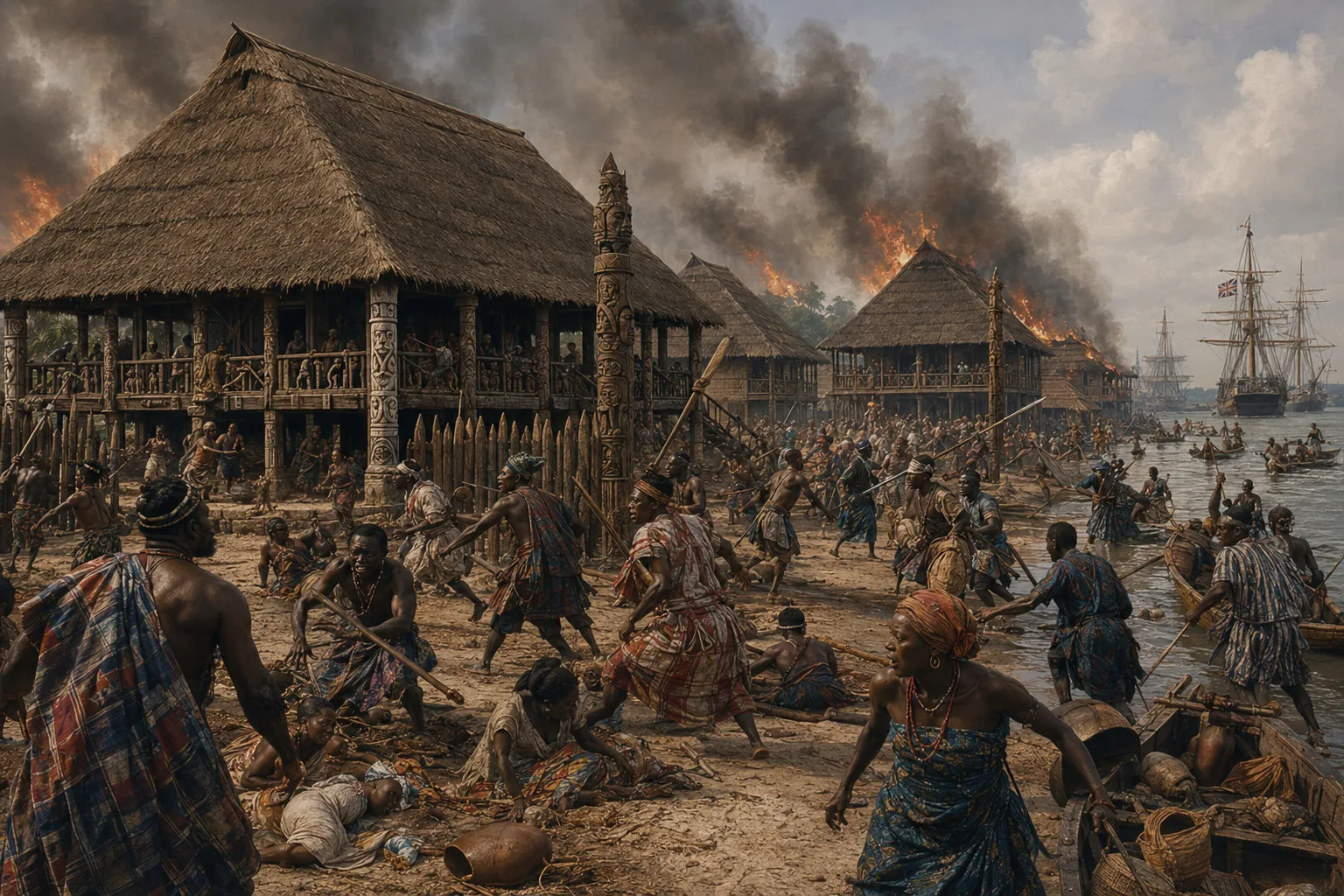
The Massacre
It is tempting to describe the 1767 Calabar Massacre as simply another example of European interference in Africa. The reality is far more complex. European merchants certainly influenced events, forming alliances with competing factions and pursuing their own commercial interests.

But the conflict also exposed deep political competition within Efik society itself. Merchant houses competed for prestige. Communities fought to protect their influence. Leaders sought greater control over increasingly valuable trade routes. The violence emerged where these internal rivalries collided with European economic ambitions. 

Understanding this complexity matters. It reminds us that Old Calabar was not merely a passive victim of foreign powers. It was a sophisticated trading society whose leaders actively shaped Atlantic commerce, even as that commerce introduced new pressures capable of destabilising the very system that had created such remarkable prosperity. History is rarely divided into simple categories of heroes and villains. The 1767 Calabar Massacre stands as a reminder that power struggles often arise from competing ambitions on every side.

The End of an Illusion

The massacre changed Old Calabar forever. Trade continued. European ships still arrived.

Commerce eventually recovered. But something essential had been lost. The confidence that had once defined relationships between merchant families had been replaced by caution.

Political alliances shifted. European traders became more deeply involved in local affairs.

The balance of power that had sustained decades of successful commerce would never again feel quite as secure.

The events of 1767 also foreshadowed a larger transformation. Within a few decades, the Atlantic slave trade itself would begin to decline. Commercial priorities shifted toward legitimate trade in palm oil and other commodities, while missionaries, diplomats, and eventually colonial administrators became increasingly influential in Old Calabar's affairs. The massacre did not cause these changes on its own. But it exposed the instability of a system that had long appeared invincible.

Lessons from a Broken Peace

The story of the 1767 Calabar Massacre is not simply about violence. It is about what happens when trust disappears. Old Calabar's remarkable success had been built on negotiation, diplomacy, and carefully managed relationships between African merchants and European traders. When those relationships gave way to rivalry and suspicion, even one of West Africa's greatest commercial centres proved vulnerable. There is an enduring lesson in that history.

True hospitality is not naïve. It is built on mutual respect, balance, and the wisdom to manage differences before they become conflict. For centuries, the Efik welcomed visitors not simply as guests, but as partners in carefully negotiated relationships that benefited everyone involved.

Today, visitors to Calabar can explore this fascinating history through its museums, royal institutions, historic districts, and cultural landmarks, each offering a window into the city's remarkable past. 

After a day of discovery, ChallawaRiver Homes provides a peaceful retreat where guests can relax in comfort while remaining within easy reach of the city's rich cultural and historical attractions.

Scroll to Top