
There were no cannons.
No invading army marched through the streets of Old Calabar.
No city walls were battered down.
Instead, history changed with ink.
On the 10th of September 1884, several Efik rulers gathered to sign what appeared to be another diplomatic agreement with Britain. Treaties were nothing new to them. For generations, the kings and merchant houses of Old Calabar had negotiated directly with European traders, missionaries, and naval officers. They understood commerce. They understood diplomacy. They believed this latest agreement was simply another step in a relationship that had already existed for centuries. It was not.
Hidden beneath the polite language of partnership was something far more significant: a transfer of political authority that neither side understood in quite the same way. The signatures were genuine. The consequences were irreversible.
A Kingdom That Had Always Negotiated as an Equal
Long before colonial rule, the Efik had built one of West Africa's most sophisticated commercial societies. European merchants did not conquer Old Calabar when they first arrived. They negotiated with it. Trade agreements were debated. Prices were bargained.
Foreign merchants relied heavily on Efik middlemen who controlled access to inland markets and dictated the terms of commerce along the Calabar River. This balance of power had endured through the slave trade, survived the transition to palm oil, and continued into the nineteenth century. The kings of Old Calabar had every reason to believe that diplomacy, not conquest, defined their relationship with Britain. That confidence would shape one of the most consequential decisions in the city's history.
Across Europe, Africa Was Being Redrawn
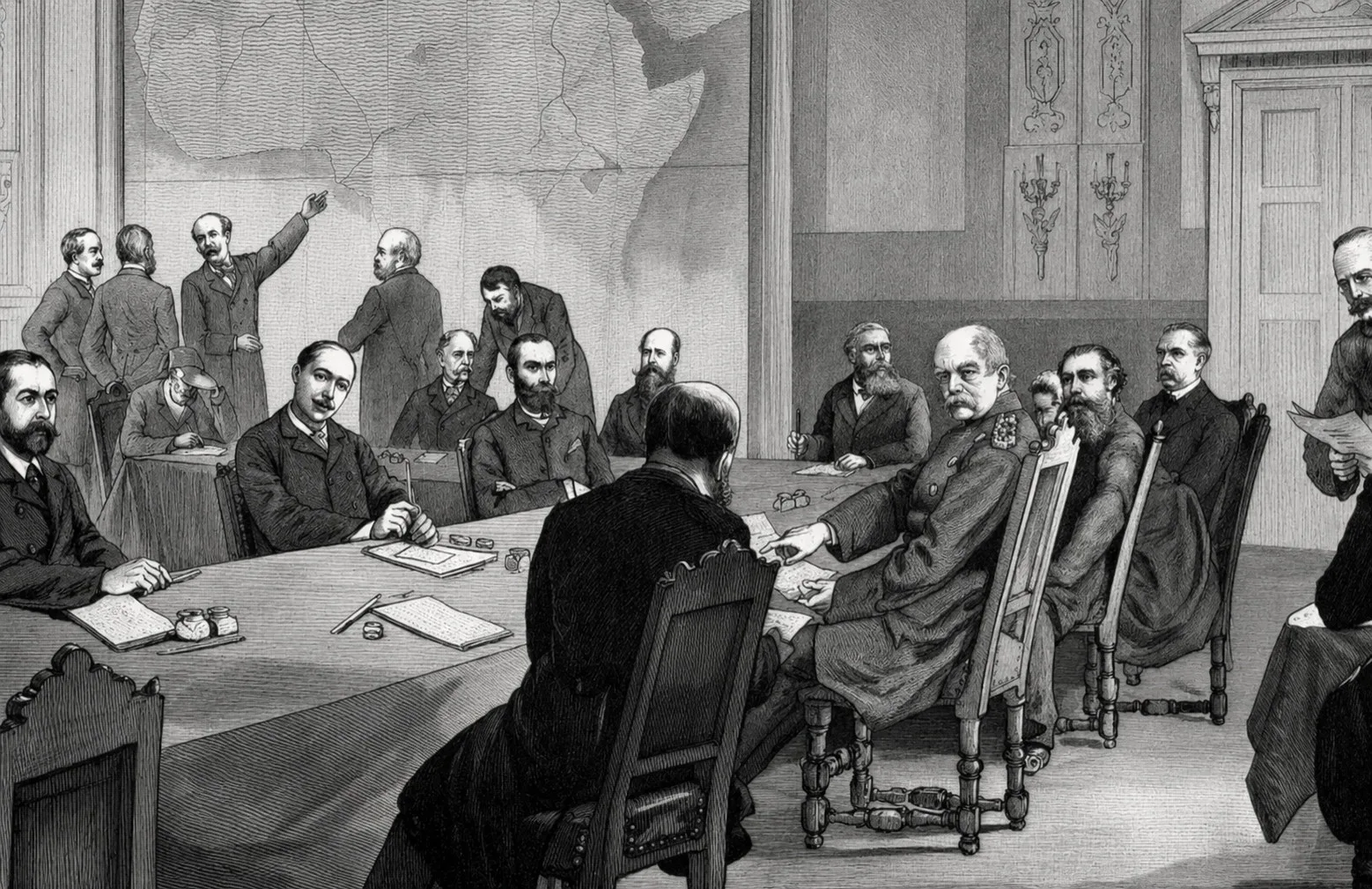
While Calabar's rulers were negotiating with British officials, another conversation was unfolding thousands of kilometres away. In Berlin, representatives of Europe's major imperial powers gathered between 1884 and 1885 to decide how Africa would be divided among themselves. No African kingdom was invited. No African ruler had a seat at the table.
The Berlin Conference established rules that encouraged European powers to claim African territories through treaties and demonstrations of "effective occupation." What had once been commercial influence was rapidly becoming political control. The Efik could not have known that their negotiations formed part of a much larger imperial strategy. To them, Britain remained a trading partner. To Britain, Calabar had become a strategic possession.
The Treaty That Meant Two Different Things
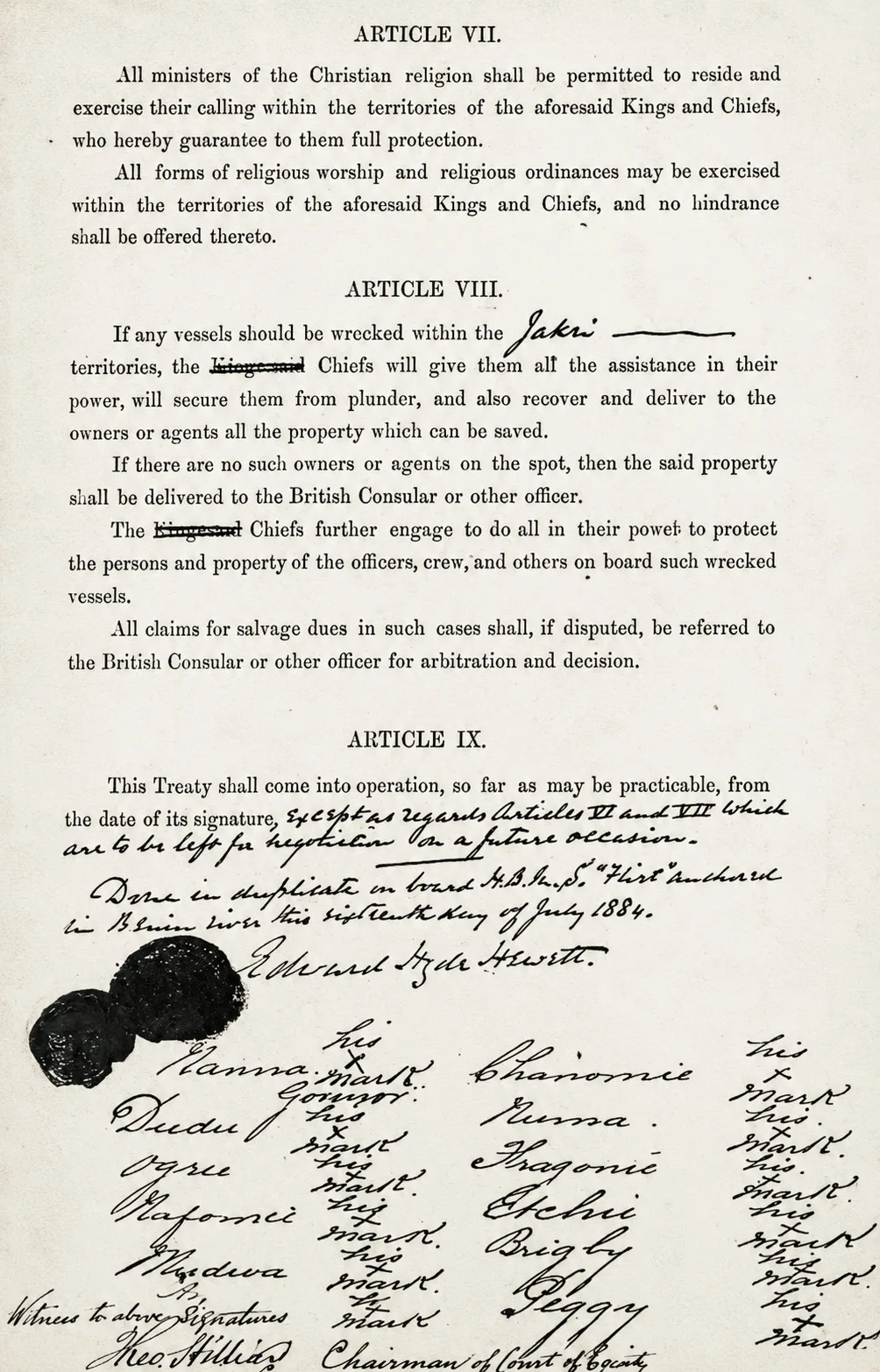
The Treaty of Protection was signed in September 1884.
On paper, Britain promised protection.
To many Efik leaders, "protection" meant military support, secure trade, and a stronger alliance with an already familiar partner. They believed they were strengthening an existing relationship, not surrendering sovereignty. British officials, however, interpreted the treaty very differently.
To them, protection meant authority.
It gave Britain the justification to supervise trade, influence governance, settle disputes, and gradually extend imperial administration over Old Calabar. The same document carried two entirely different meanings. One side saw partnership. The other saw possession. That misunderstanding would alter the course of Nigerian history.
When Diplomacy Quietly Became Colonial Rule
Colonial rule did not arrive in Calabar overnight. It advanced gradually. British officials assumed increasing control over administration. Political decisions that had once belonged to local rulers became subject to colonial oversight.
Representing the British Crown was Consul Edward Hyde Hewett, whose mission was to secure agreements with coastal rulers before rival European powers could do the same. To the British government, these treaties were legal instruments that established political authority. For many Efik leaders, however, they appeared to be another diplomatic alliance, similar to the trade agreements they had negotiated with European merchants for generations.
Economic priorities increasingly reflected British interests. The authority of traditional institutions remained visible, but their independence steadily diminished. Ironically, many of these changes happened without dramatic military conquest. The transformation occurred through paperwork, legal language, and administrative reforms. Sometimes the most profound revolutions begin not with violence, but with signatures.
The Cost of a Misunderstanding
Looking back, it is easy to ask why the Efik rulers signed the treaty. History, however, rarely offers the luxury of hindsight. Everything they knew suggested Britain was a commercial ally.
For generations, diplomacy had protected Calabar's prosperity. Negotiation had worked. Partnership had worked. Why would this treaty be different? The tragedy lies precisely there.
The Efik interpreted the agreement through the lens of centuries of diplomatic relationships. Britain interpreted it through the emerging language of empire. Neither side entered the conversation with the same assumptions. The result was a misunderstanding whose consequences extended far beyond Calabar, influencing the political evolution of what would eventually become modern Nigeria.
A City That Adapted Once Again
Colonial rule transformed Calabar, but it did not erase it. The city continued to evolve. Western education expanded. Modern institutions developed. Roads, administrative buildings, and new systems of governance reshaped urban life. Yet the traditions that had defined Calabar for centuries endured.
The Obong of Calabar remains a respected cultural institution. Efik language continues to be spoken. Festivals, cuisine, traditional ceremonies, and customs still connect present-day Calabar with its remarkable past. Perhaps that is the city's greatest achievement. Despite slavery, commercial rivalry, missionary influence, and colonial rule, Calabar never stopped being Calabar. It simply learned to survive each new chapter.
The Signature That Still Echoes Today
The 1884 Treaty of Protection reminds us that history is not always rewritten by battles. Sometimes it is rewritten by words. A single phrase can mean different things to different people.
A handshake can conceal unequal expectations. A partnership can quietly become control.
That lesson extends far beyond history.
In hospitality, as in diplomacy, perception and reality must align. Expectations shape trust, and trust is built through clarity, honesty, and mutual understanding. When those expectations differ, even the most well-intentioned agreements can lead to disappointment. The treaty's consequences reached far beyond Old Calabar. In the years that followed, Britain consolidated its influence through the Oil Rivers Protectorate, bringing much of the Niger Delta under formal colonial administration. Calabar, once an independent trading power that negotiated with foreign merchants as an equal, gradually became an administrative centre within Britain's expanding colonial system. This marked the beginning of a political transformation that would eventually contribute to the formation of modern Nigeria.
Today, visitors exploring Calabar encounter a city where royal traditions, colonial architecture, museums, churches, and cultural landmarks tell the story of resilience through change. Staying at ChallawaRiver Homes places guests within easy reach of this rich historical landscape, offering a comfortable base from which to discover the many layers of Calabar's past.
The treaty signed in 1884 changed everything. But it did not end Calabar's story. It simply began a new chapter, one whose echoes can still be heard in the city today. Trade led to diplomacy.
Diplomacy built prosperity. Prosperity attracted greater imperial interest. Missionaries transformed society. The Treaty of 1884 transformed political power.