
From Merchants to Merchandise: The Robin Johns' Fight for Freedom
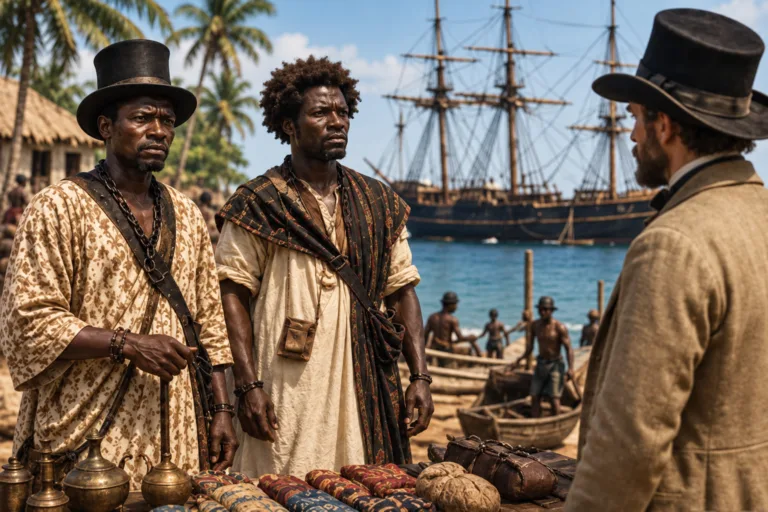
The chains feel different when they were wrapped around your own wrists.
For years, Little Ephraim Robin John and Ancona Robin John had stood on the shores of Old Calabar as respected merchants. They negotiated with European captains, dictated prices, and watched ships disappear over the Atlantic horizon carrying fortunes that helped build their family's empire.
Now they watched the same horizon from beneath the deck of a slave ship.
Not as merchants.
Not as negotiators.
But as cargo.
History has few ironies more devastating. The very trade that had enriched the Robin Johns had finally consumed them. Bound in chains and stripped of the influence that once commanded respect, the brothers began a journey that would carry them thousands of miles from the Calabar River to the Caribbean and eventually to England itself.
What neither they nor their captors could have imagined was that their greatest weapon would not be wealth...
It would be the written word.
The Betrayal That Changed Everything
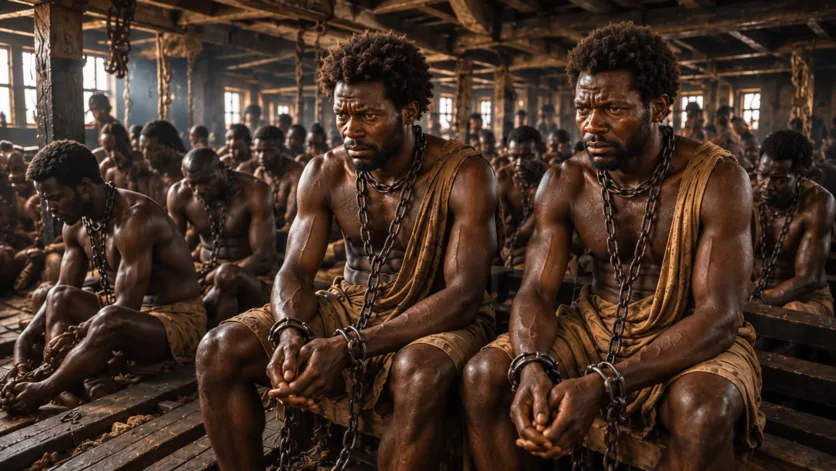
The attack in 1767 was carefully orchestrated. What appeared to be an ordinary commercial meeting quickly descended into violence as rival factions moved against the Robin Johns. Their longtime rivals, allied with British Captain Benjamin Bevins, exploited rising tensions over trade and influence in Old Calabar.
Warriors descended upon the meeting. Several of Grandy King George's followers were killed.
Little Ephraim and Ancona were seized before they had time to escape. The irony was immediate and cruel. Men who had spent years negotiating the sale of captives were themselves shackled, marched aboard a European vessel, and transported across the Atlantic as enslaved people.
The distinction between merchant and merchandise disappeared overnight.
Their first destination was Dominica in the Caribbean, where they were sold into slavery like countless others who had left the shores of Old Calabar before them. For the first time, the Robin Johns experienced the system not from a position of privilege, but from within its crushing grip.
Letters That Refused to Surrender
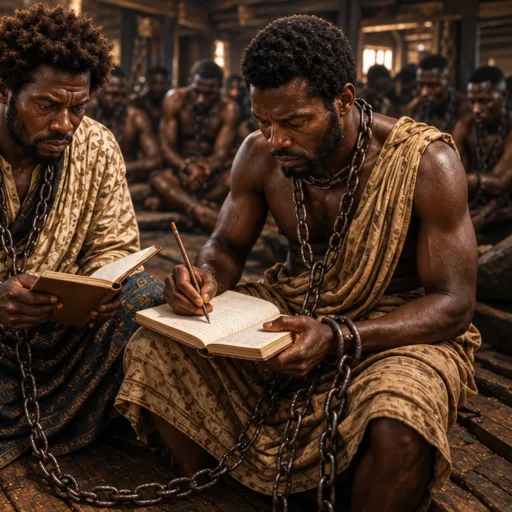
Most captives had no voice. The Robin Johns did. One advantage their years in international trade had given them was literacy. They spoke English, understood European customs, and knew exactly who might listen. Rather than surrender to despair, the brothers began writing.
They addressed desperate letters to Thomas Jones, a British merchant who had once been their trusted trading partner. In those letters, they reminded him of the relationships they had built, appealed to his sense of justice, and pleaded for intervention. Their words travelled farther than they could. Eventually, their story reached influential figures in Britain, including Charles Wesley, the renowned Methodist leader, whose network helped draw attention to their extraordinary case. Once again, the Robin Johns relied on the same skills that had built their commercial empire: communication, negotiation, and diplomacy. Only now, they were no longer bargaining for profit. They were bargaining for their lives.
The Law That Broke Their Chains
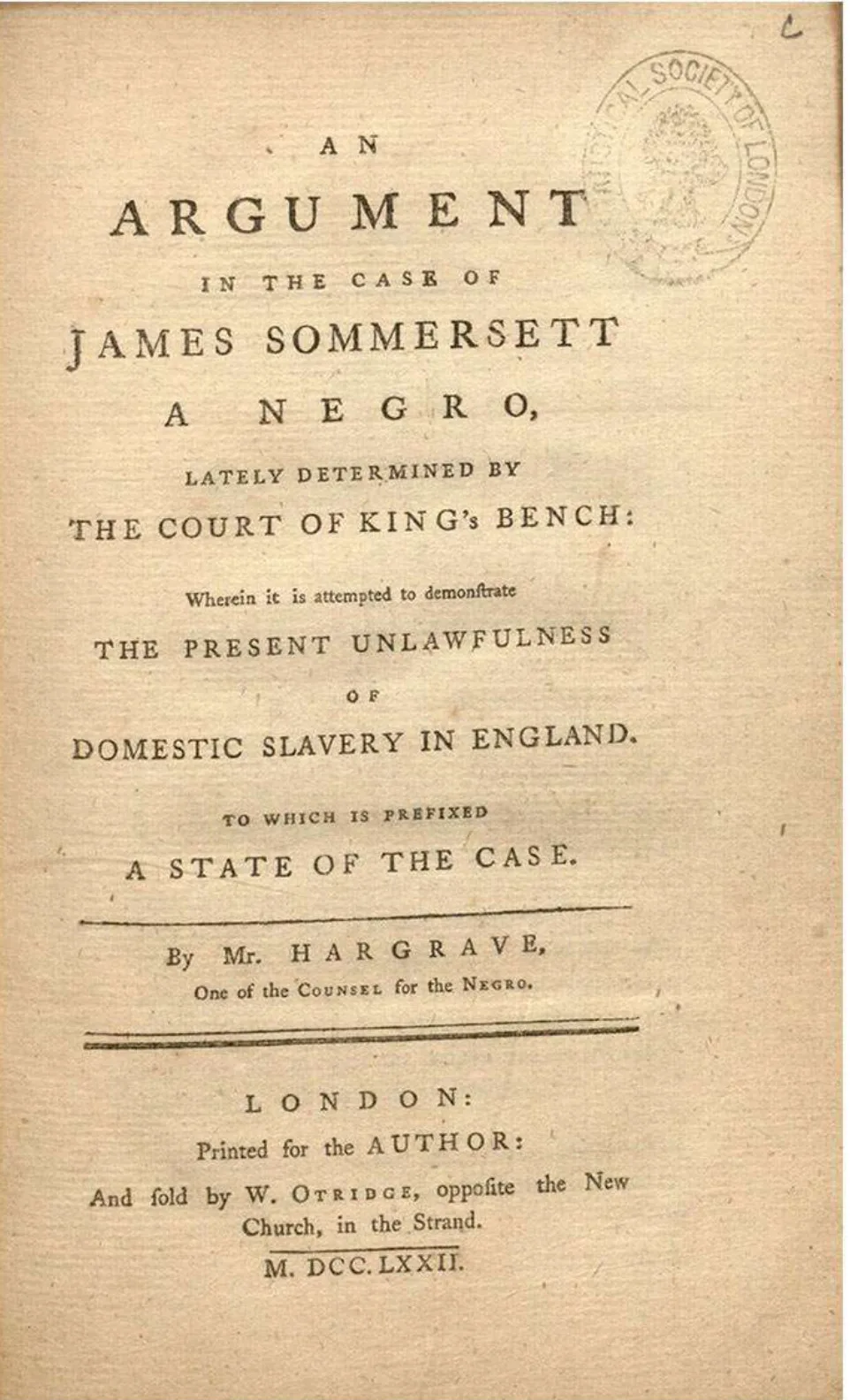
By the early 1770s, a new legal debate was unfolding in Britain.
Could slavery exist on English soil without a law explicitly allowing it?
The question reached its defining moment in 1772 through the landmark case Somerset v. Stewart, in which Lord Mansfield ruled that slavery was unsupported by English common law. Although the decision did not abolish slavery throughout the British Empire, it meant that enslaved people could not simply be forced from England against their will without legal authority.
For the Robin Johns, the ruling arrived at a remarkable moment. Their friend and former trading partner, Thomas Jones, worked tirelessly to secure their freedom. Armed with the brothers' letters and the changing legal climate, he pursued their release through the courts using habeas corpus, arguing that their detention had no lawful basis under English law. The irony was impossible to ignore.
The same British legal system that had helped sustain an empire built on enslaved labour now became the instrument that restored the freedom of two African merchants who had themselves once profited from that very trade. After years of uncertainty, Little Ephraim Robin John and Ancona Robin John walked free. Not because the slave trade had ended. But because history had taken an extraordinary turn.
More Than a River, More Than a Port

Today, the Calabar River flows with a quieter rhythm than it did in the eighteenth century. The merchant ships have long disappeared, but the stories they carried continue to shape the city's identity. Visitors who explore Old Calabar encounter more than historic buildings and royal institutions. They discover a city whose past is woven from diplomacy, commerce, resilience, and difficult conversations about power and humanity.
Understanding the Robin Johns is not about celebrating the slave trade or condemning a single family. It is about recognizing the complexity of a history that connected Africa, Europe, and the Americas in ways that continue to influence the world today.
At ChallawaRiver Homes, that history is never far away. Located in the city with the same waterways that once welcomed merchants from across the Atlantic, guests are perfectly positioned to explore the landmarks, museums, and royal heritage of Old Calabar. Every visit becomes an opportunity to engage with a city whose greatest stories are not always the easiest to tell, but are among the most important to remember.